By admin
February 13, 2026
By admin
February 13, 2026
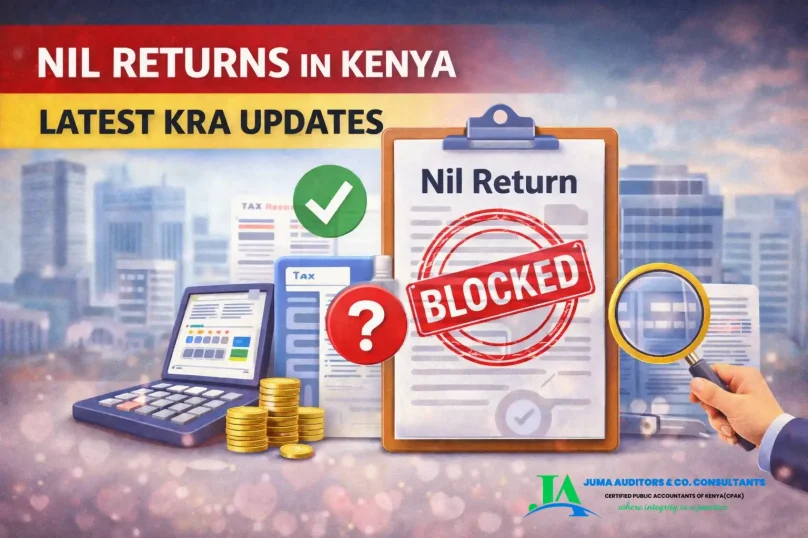
Filing nil returns has long been a compliance requirement for Kenyan taxpayers with no income during a tax period. However, recent actions by the Kenya Revenue Authority (KRA) signal a major shift in how nil returns are treated.
As a trusted accounting and audit firm in Kenya, Juma Auditors breaks down the latest developments, what they mean for individuals and businesses, and how to stay compliant without risking penalties.
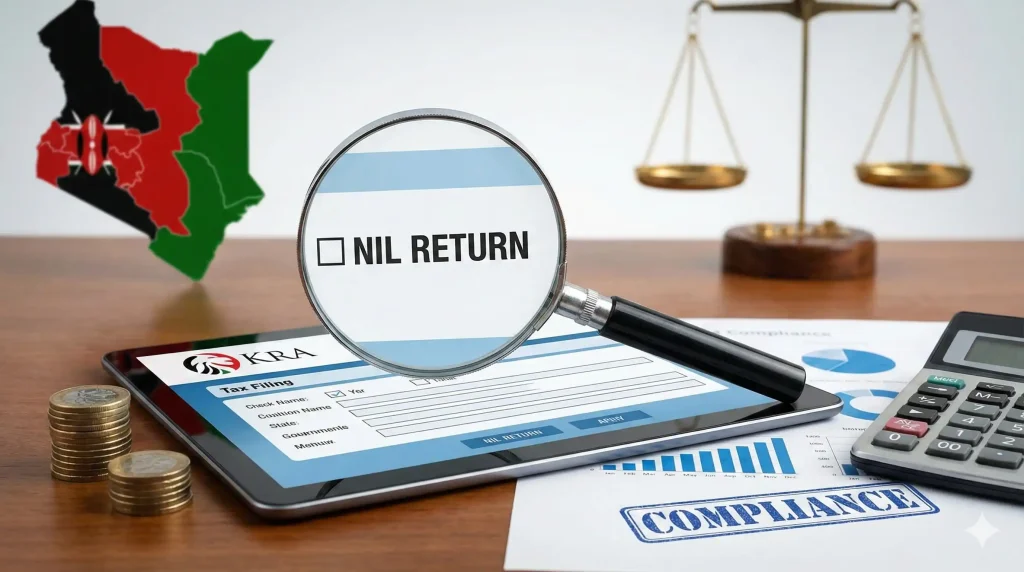
What Are Nil Returns?
Nil returns are tax filings submitted by individuals or entities that did not earn any taxable income during a specific tax period. They are commonly filed by:
- Individuals without employment or business income
- Dormant businesses
- Newly registered taxpayers yet to commence operations
Even without income, filing nil returns is mandatory to avoid late filing penalties.
Latest News: KRA Tightens Controls on Nil Returns
The Kenya Revenue Authority has recently restricted and closely monitored the filing of nil returns as part of a broader compliance and revenue-leakage prevention strategy.
KRA has raised concerns that many taxpayers have been misusing nil returns, filing them despite having identifiable income streams through bank transactions, mobile money, employment records, or business activity.
In response, KRA has:
- Temporarily restricted nil return submissions for certain taxpayers
- Increased data matching using iTax, eTIMS, employer PAYE records, and withholding tax data
- Flagged taxpayers whose financial activity contradicts nil declarations
Court Rulings Strengthen KRA’s Position
Recent court decisions have reinforced KRA’s authority to challenge questionable nil returns. Kenyan courts have ruled that taxpayers must maintain proper financial records to justify nil income claims.
Where income indicators exist and nil returns are filed without supporting documentation, KRA is legally justified in raising tax assessments and penalties .
What This Means for Taxpayers in Kenya
1️⃣ Nil Returns Are No Longer “Automatic”
Taxpayers may now face additional scrutiny before being allowed to submit nil returns on iTax.
2️⃣ Income Visibility Has Increased
KRA uses multiple data sources, including:
- Employer PAYE filings
- Bank and mobile money data
- eTIMS transaction records
- Withholding tax certificates
Any mismatch may trigger audits or system blocks.
3️⃣ Risk of Penalties Is Higher
Incorrect nil returns can lead to:
- Backdated tax assessments
- Interest and penalties
- Compliance audits
Who Should Still File Nil Returns?
You should file nil returns only if:
- You had no employment, business, or professional income
- You received no taxable allowances or commissions
- You can reasonably support the nil position if questioned
Dormant companies and individuals without income must still file — but accurately.
Best Practice: What Juma Auditors Recommends
As a professional audit and accounting firm in Kenya, Juma Auditors advises taxpayers to:
✔️ Review all income sources before filing
✔️ Avoid nil returns if any income was earned
✔️ Maintain proper records, even during dormant periods
✔️ Seek professional advice when unsure
Filing incorrectly is far more costly than filing correctly.
How Juma Auditors Can Help
We support individuals, SMEs, and companies across Kenya with:
- Tax compliance reviews
- Nil return verification
- KRA audits and objections
- Accounting and bookkeeping
- Tax advisory and compliance support
Whether you are an individual taxpayer or a business owner, we help you file accurately, stay compliant, and avoid penalties.
Nil returns in Kenya are no longer a simple routine filing. With enhanced data matching and stricter enforcement, taxpayers must exercise caution and accuracy.
If you are unsure whether to file a nil return, it is best to consult a professional. Juma Auditors is here to guide you through the process and protect you from unnecessary compliance risks.
📞 Contact Juma Auditors today for expert tax and compliance support.